
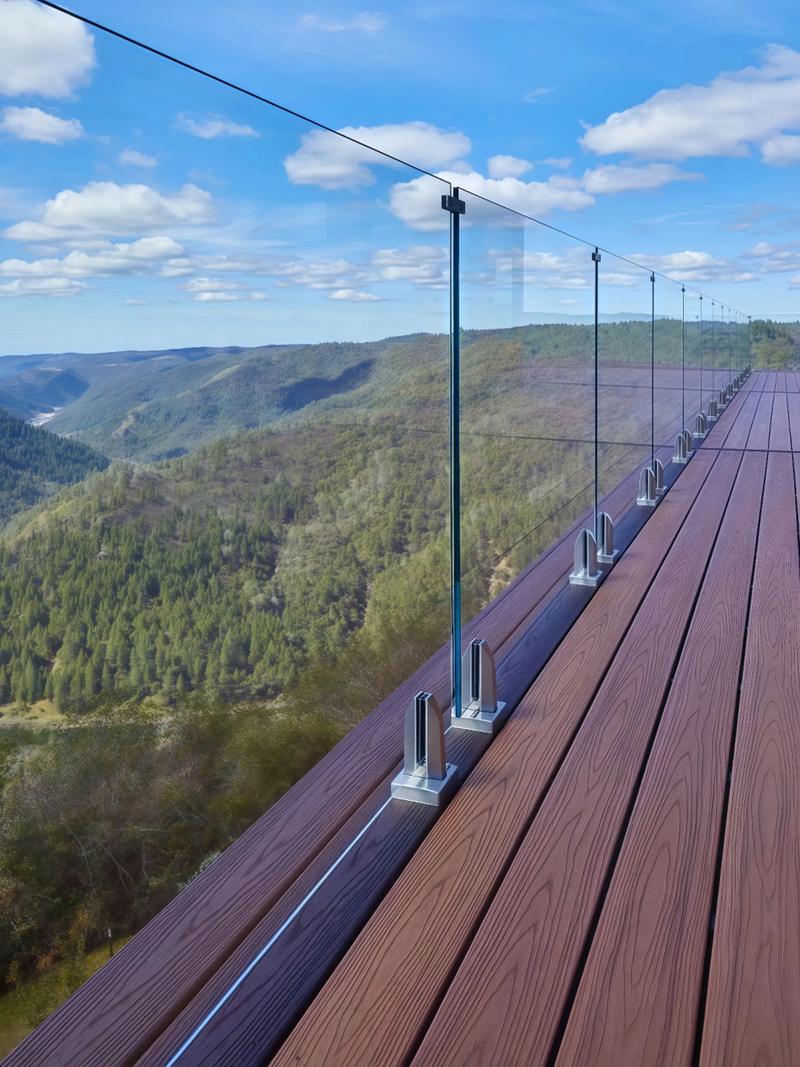
Many families have glass railings installed on their balconies and in their courtyards, as well as in the outdoor areas of parks and shopping malls. They look good, don’t obstruct the view, and are especially comfortable to use in summer. But in winter, many people start to worry: will glass railings frost over? Frost makes them slippery and obstructs vision, which is quite dangerous. Today, we’ll explain this in layman’s terms, based on practical experience from home use—easy to understand and remember.
The answer is: glass railings will most likely frost over in winter, especially in places with cold and high humidity, such as Northern Europe and parts of North America. Don’t think it’s due to poor railing quality; it’s simply a physical phenomenon, the same reason car windows frost over in the winter morning—not surprising at all.Where to find the 3C mark on glass railings?
Why does frost form? It’s very simple. In winter, the outdoor temperature is low, and the surface of the glass railing becomes very cold. If the air is humid, this moisture will come into contact with the cold glass and slowly condense into small ice crystals, piling up layer by layer—this is the frost we see. Just like when you take a bottle of ice water out of the freezer, water droplets quickly form on the bottle. In winter, when the temperature is even lower, these droplets turn into frost.Are Laminated Glass Railings Really Explosion-Proof?
However, not all glass railings are prone to frost. There are two situations where frost is more noticeable. The first is exposed outdoor glass railings, without any shelter. The cold winter wind blows directly on them, causing the glass temperature to drop rapidly, resulting in faster and more abundant frost formation. For example, railings in a home’s yard or a roadside park are very likely to have a thick layer of frost on them in the mornings of winter.What Height of Barriers Should Be Used in High-Traffic Areas?
The second situation is in places with a large temperature difference between indoors and outdoors. For example, glass railings on balconies. In winter, the indoor temperature is warm with the heating on, while it’s freezing cold outside. The inside of the glass is close to the heater, while the outside faces the cold wind. This large temperature difference causes indoor moisture to easily escape to the glass and condense into frost. This is the main reason why many families’ balcony railings frost in winter.
Frosty glass railings are indeed a bit of a problem. The surface is slippery, and if someone accidentally leans on it, or if children are playing nearby, it’s easy to slip and fall. Furthermore, the glass becomes foggy, obscuring the outside view and affecting visibility. But don’t panic! There are several super simple ways to reduce frost or quickly defrost.
The first method is to apply an anti-frost coating to the glass. These are available in supermarkets during winter; they’re inexpensive. Spray them on the glass surface and wipe them evenly with a cloth. This forms a protective film, reducing moisture condensation. Even if frost forms, it will be very thin and melt quickly in the sun or wind. This method is super convenient and lasts for several days.
The second method is to add a shield to the railing. For example, install a sunshade on the balcony or plant tall plants next to the railing in the yard to block some of the cold wind. This will prevent the glass temperature from dropping too quickly, greatly reducing frost formation. However, be careful not to block too much sunlight, otherwise, it will be difficult to get any sunshine in winter.
The third method is to defrost promptly. If you find frost on the railing in the morning in winter, don’t pour hot water on it (it can shatter the glass). Just gently wipe it off with a dry cloth or a snow scraper. If the glass is a bit icy, you can use a hairdryer on a low setting to thaw it quickly. Many families do this; it’s simple and safe.
Another tip: when choosing glass railings, don’t blindly pursue “frost-proof” features. Actually, frost formation on ordinary tempered glass in winter is normal. The key is proper protection and cleaning afterwards. Many families have used their glass railings for years, and with a little cleaning in winter, it doesn’t affect their use at all.
In general, frost formation on glass railings in winter is normal and nothing to worry about. Just choose a simple method based on your home’s situation to maintain both its appearance and safety. You can still enjoy the sun on your balcony and take walks in your yard in winter without being bothered by frost.