
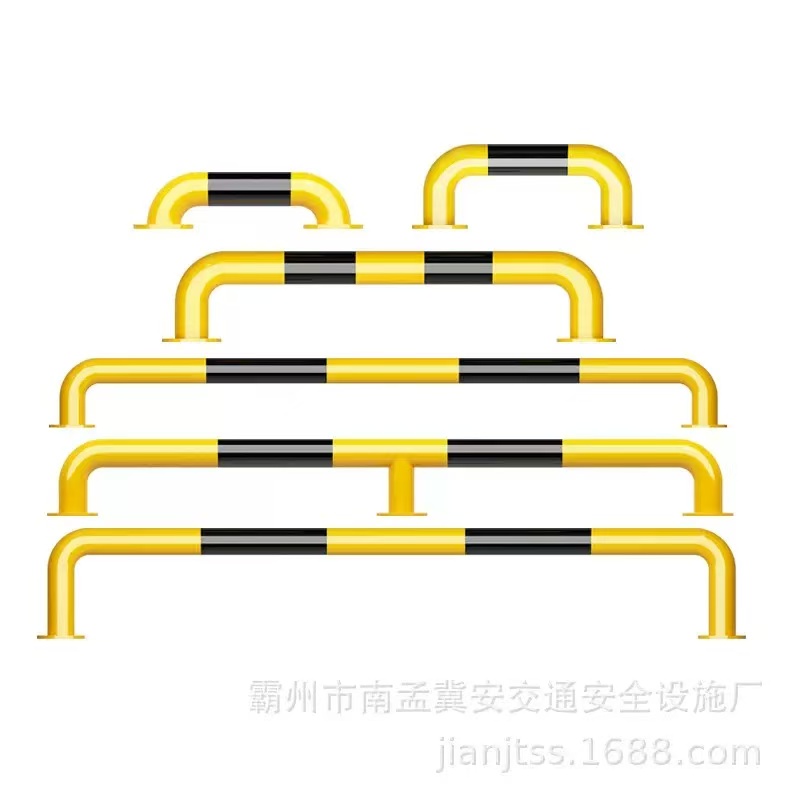
The durability of crash barriers directly determines their protective lifespan and safety assurance capabilities. Especially in different scenarios such as highways, bridges, and coastal areas, materials must withstand multiple tests including wind and rain erosion, vehicle vibration, and temperature changes. The mainstream crash barrier materials on the market include hot-dip galvanized steel, stainless steel, concrete, and aluminum alloy, and the durability performance of different materials varies significantly. Below, we compare the characteristics of various materials in detail based on core durability indicators to help you determine which material is more suitable for long-term stable use.How to Reinforce and Stabilize Shaking Crash Barriers
Hot-dip galvanized steel is currently the most widely used crash barrier material. Its durability advantage lies in the balanced performance of “rust resistance + high cost-effectiveness.” The hot-dip galvanizing process involves immersing steel in molten zinc, forming a dense zinc layer on the surface. This zinc layer can isolate air and moisture, effectively preventing the steel from rusting. In typical outdoor environments, hot-dip galvanized steel guardrails have a lifespan of 15-20 years. Even in damp rural roads or ordinary highways, their lifespan can be further extended with regular maintenance (repainting with anti-corrosion paint every 3-5 years). Furthermore, steel itself has excellent impact resistance, absorbing energy through deformation during vehicle collisions and is not easily broken, making it suitable as a material for crash barriers on mainstream roads. However, in coastal environments with high salt spray, the zinc layer is easily corroded, requiring additional re-galvanizing or anti-corrosion coating treatment.Which is better, frameless or framed glass railings?
The core advantage of stainless steel is its extreme resistance to rust, making it particularly suitable for harsh corrosive environments. Commonly used 304 or 316 stainless steel guardrails have a built-in passivation film that resists corrosion from high salt spray, high humidity, and acidic or alkaline soils. In coastal areas and chemical industrial parks, their lifespan can easily exceed 25 years, requiring minimal daily maintenance except for periodic wiping of surface dust. At the same time, stainless steel has high strength and toughness, and its impact resistance is comparable to that of ordinary steel. However, stainless steel’s drawbacks include its high cost, approximately 2-3 times that of hot-dip galvanized steel, and stringent welding requirements. Improper welding can lead to localized corrosion, affecting overall durability. Therefore, it’s more suitable for scenarios with extremely high corrosion resistance and ample budgets.Can glass railings be installed on high-rise balconies?
Concrete’s durability lies in its long-term stability through impact resistance and aging resistance, making it particularly suitable for heavy-load road sections and fixed protection scenarios. Reinforced concrete guardrails are robust, capable of withstanding strong impacts from large vehicles, and are not easily deformed. Concrete itself has strong resistance to weathering and temperature changes, allowing for a service life of over 30 years in outdoor environments. Furthermore, concrete is widely available, inexpensive, and requires minimal maintenance, only periodic inspections for cracks. However, concrete guardrails also have significant disadvantages: they are heavy, have long construction periods, and if cracks are not repaired promptly, rainwater can seep in, causing internal steel reinforcement corrosion and affecting structural strength. Additionally, their lack of flexibility makes them unsuitable for flexible installation on curved roads, making them more suitable for fixed straight-line protection scenarios such as highway medians and bridge sides.
The durability highlights of aluminum alloy materials are their lightweight and corrosion resistance, but their overall strength is limited, making them suitable for low-impact scenarios. Aluminum alloy guardrails easily form an oxide film on their surface, naturally providing some rust resistance. In ordinary outdoor environments, their lifespan is approximately 10-15 years. They are also lightweight and easy to install, making them suitable for pedestrian and small vehicle traffic in residential areas, parks, and other similar settings. However, aluminum alloys have relatively weak impact resistance and are prone to breakage in collisions with large vehicles. Their durability and safety are far inferior to steel and concrete, making them unsuitable as crash barrier materials for main roads.
In summary, there is no absolutely “most durable” material. The choice should be based on the specific scenario: 316 stainless steel is preferred for highly corrosive coastal environments; hot-dip galvanized steel is chosen for mainstream highways and rural roads, balancing durability and cost-effectiveness; concrete is suitable for heavy-load sections and fixed protection scenarios; and aluminum alloy is suitable for low-impact scenarios such as residential areas and parks. Furthermore, regardless of the material chosen, proper installation procedures and regular maintenance can further extend the lifespan, ensuring the crash barrier provides long-term safety protection.