
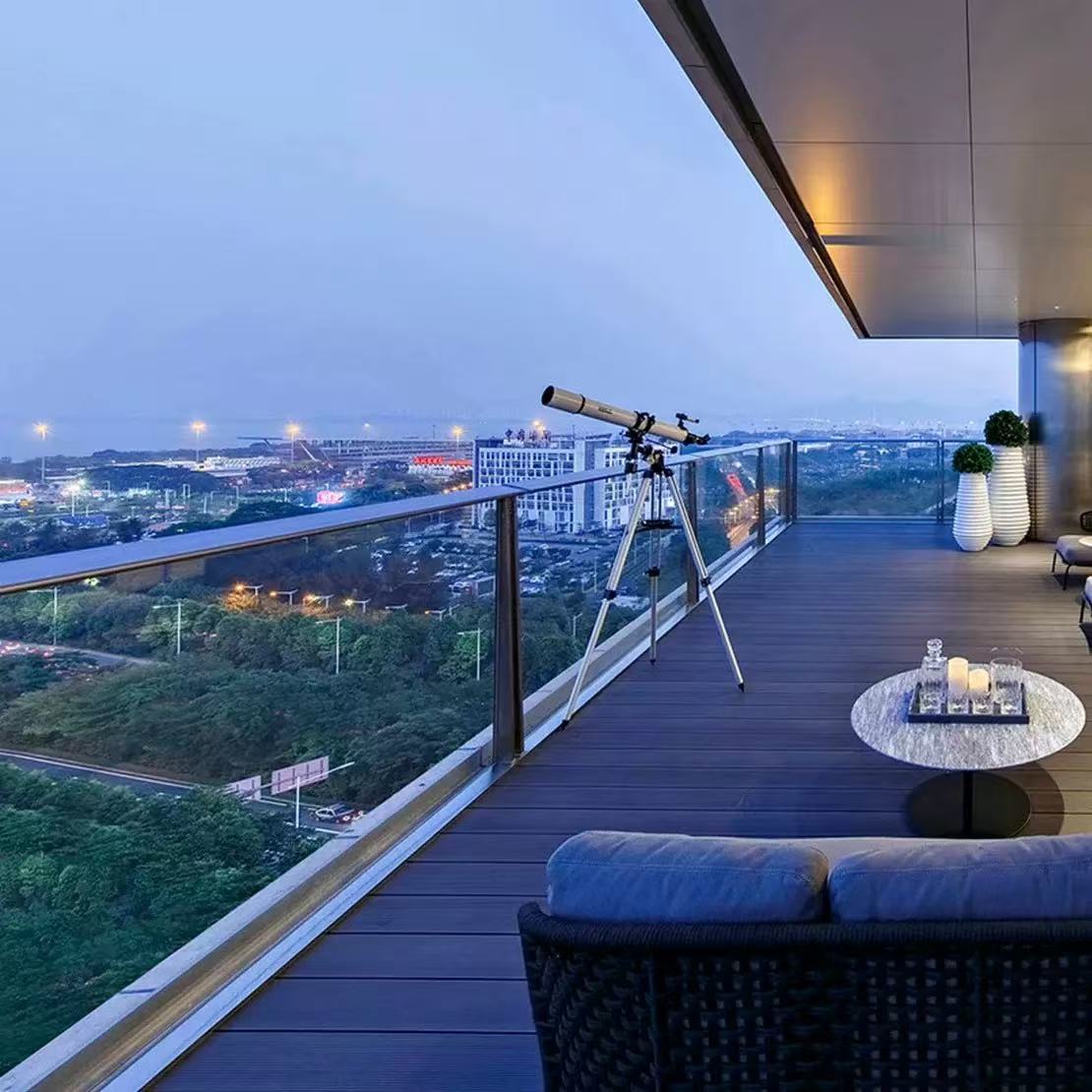
Imagine pushing a glass railing on your balcony or stairs and feeling it sway back and forth—isn’t that a little scary? Glass railings look simple and modern, and are common in many homes, hotels, and poolside areas. But once they start wobbling, it’s not only unsafe, but it also makes people uneasy every time they pass by. The good news is that most wobbly glass railings can be easily repaired. Today, we’ll explain in layman’s terms why they wobble and how to reinforce them, without complicated tools or professional skills.What to do if tempered glass railings spontaneously shatter?
First, we need to understand why glass railings wobble. The most common reason is loose connecting parts. Glass railings are assembled with screws, bolts, and brackets—like the “joints” of the railing. Over time, these small parts may become loose due to people leaning on the railing, wind, or even daily vibrations. If you gently push the railing and hear a “clattering” sound, then some parts are definitely loose.Which is better, frameless or framed glass railings?
Reinforcing the loose connecting parts is the simplest solution. First, find a screwdriver or wrench (make sure it’s the right size for the railing’s screws/bolts). Inspect every connection point along the entire railing: the brackets securing the glass and posts, the connections between the posts and the ground, and all other joints. Slowly tighten each loose screw or bolt—don’t overtighten, or you might break the glass or damage the brackets. If any screws are stripped (meaning they won’t tighten properly), replace them with new screws of the same size. This simple step can solve 70% of railing wobbling problems.Can glass railings be installed on high-rise balconies?
If tightening doesn’t work, the problem might be with old or damaged hardware. Over time, metal brackets, screws, or hinges will rust and wear down—especially outdoor railings exposed to rain and snow, or those near the sea (where there’s salt), making them more prone to damage. Rusty hardware loses its strength, and even when tightened, it won’t hold the railing in place. Replace all rusty or cracked parts with new, high-quality ones. Stainless steel hardware is recommended for outdoor railings, as it’s less prone to rust and lasts longer. Many hardware stores offer “railing repair kits” containing all the necessary parts.
Another common cause is an unstable post base. The upright posts (those supporting the glass) must be firmly fixed to the ground. If the posts themselves wobble, the entire railing will wobble. To fix this, first check if the posts are bolted to the ground or simply glued. If glued, the glue may have hardened and become ineffective. You can apply more strong adhesive around the base of the post, or drill a few small holes and secure it more firmly with bolts. Use wood screws for wooden floors and expansion bolts for concrete floors—they will hold the concrete firmly and won’t loosen.
Sometimes the glass is loose within the frame. There’s a small gap between the glass and the metal frame of a glass railing, containing rubber or plastic gaskets. These gaskets hold the glass in place and prevent it from wobbling. If the gaskets age, harden, or are lost, the glass will rattle. Simply replace the old gaskets with new ones that match the glass size. You can buy them at a home improvement store, and first measure the thickness of the glass. Replacing the gaskets with new ones is like giving the glass a “soft hug,” preventing it from wobbling.
Here’s a safety tip: Always check the glass for cracks before reinforcing it. Even if there’s only a small crack, don’t even think about repairing it—replace the glass directly. Cracked glass may shatter suddenly, especially when tightening the hardware. Also, outdoor railings (such as poolside or balcony railings) must have waterproof hardware. Seawater or rainwater accelerates rusting, so stainless steel or galvanized parts are best.
For example, many homes in Europe and America have glass balcony railings. If the railing starts to wobble, homeowners usually first use a wrench to check all the screws, tightening any loose ones, and replacing any rusty brackets. For railings near the sea, they often replace them with marine-grade stainless steel hardware to prevent seawater corrosion. This simple process takes less than an hour and can make the railing safe again.