
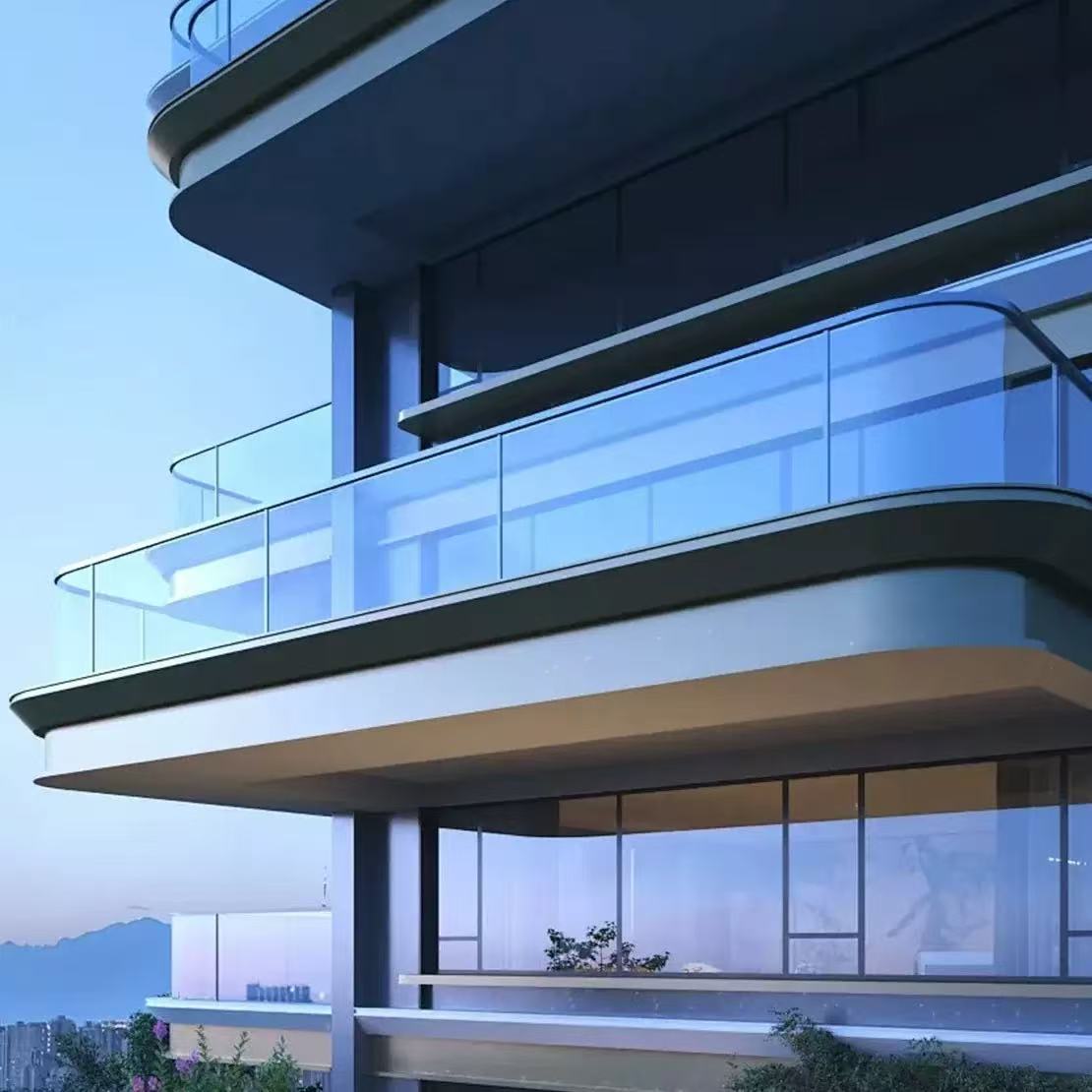
Tempered glass is a popular choice for balcony railings due to its high strength and ability to shatter into small, blunt-angled fragments. However, spontaneous breakage occasionally occurs, causing panic in many households. Spontaneous breakage of tempered glass is often caused by internal impurities or stress concentration. In such cases, it can damage property and threaten personal safety. Don’t panic. The key is to follow the principle of “safety first, then investigate the cause, and handle the situation properly.” Below is a detailed outline of the complete response plan after a tempered glass railing spontaneously shatters.Can Glass Railings Display Holographic Images?
Step 1: Emergency Response, Strengthening the Safety Line. After a spontaneous breakage, immediately evacuate people from the balcony and surrounding area, especially keeping children away to prevent injury from falling glass fragments. Then close the doors and windows in the balcony area to reduce the risk of wind and vibration causing remaining glass fragments to fall or fly. If some glass remains on the railing frame after the breakage, do not touch or strike it. Use warning tape, fencing, or temporary barriers to create a warning area around the balcony edge, alerting family and neighbors to be aware of the danger. Meanwhile, wearing thick gloves and non-slip shoes, and simply clean up the scattered glass shards on the ground. When cleaning, first use cardboard or a broom to gather the shards, then wipe away any remaining small particles with a damp cloth. Avoid picking them up directly with your hands.A Complete Guide to Balcony Glass Railing Installation
The second step: Investigate the cause and preserve evidence for subsequent handling. After cleaning up the dangerous shards, it is necessary to promptly investigate the cause of the spontaneous breakage. This not only prevents similar problems from recurring but also provides evidence for possible rights protection. Common causes of spontaneous breakage fall into three main categories: First, defects in the glass itself, such as the introduction of nickel sulfide impurities during the production process. These impurities expand in volume with changes in ambient temperature, leading to glass breakage. Second, improper external stress, such as the railing being struck by a heavy object, long-term hanging of heavy objects, or stress concentration caused by dimensional deviations in the glass during installation or frame compression. Third, environmental factors, such as prolonged exposure to sunlight, sudden temperature changes, or high humidity on the balcony causing frame corrosion and deformation, indirectly compressing the glass. During inspection, pay attention to the center of the glass breakage. If there are small black or gray spots at the center, it’s likely due to impurities causing spontaneous breakage. If the breakage starts from the edge, it’s often related to external stress or improper installation. Also, preserve photos and videos of the scene, recording the time of the breakage and the surrounding environment. If the glass is still under warranty, keep the purchase contract and warranty certificate.
Step 3: Proper Replacement to Prevent Secondary Risks. After a spontaneous breakage, the railing loses its protective function and needs to be replaced by a professional renovation team or glass manufacturer as soon as possible. Do not purchase and install the glass yourself. Three points should be noted when replacing glass: First, choose the right glass material, prioritizing laminated tempered glass. The PVB interlayer between the two layers of tempered glass firmly holds the fragments together after breakage, offering far superior safety compared to ordinary tempered glass. Second, strictly follow installation specifications, ensuring the new glass dimensions precisely match the frame. Add shock-absorbing rubber pads during installation to prevent direct contact between the glass and the metal frame. Use qualified expansion bolts to secure the frame firmly without loosening. Third, inspect the frame condition. If the original frame has corrosion, deformation, or loosening issues, it must be repaired or replaced simultaneously to prevent uneven stress on the glass due to frame problems.
Fourth step: Prevention is key to reducing the probability of spontaneous breakage. In subsequent use, the risk of spontaneous breakage of tempered glass railings can be reduced through some details: avoid hanging heavy objects or piling up clutter on the railings; regularly check the glass surface for scratches and cracks, the frame for corrosion, and bolts for looseness, and address any problems promptly; apply explosion-proof film to balcony glass, which can both increase glass strength and prevent shards from flying in the event of a spontaneous breakage; in high-rise residential buildings, balconies should avoid prolonged exposure to direct sunlight, and sunshades can be installed to regulate light.
Although spontaneous breakage of tempered glass railings is an unexpected event, the risk can be minimized as long as it is handled promptly and properly. When replacing railings, do not choose inferior glass or unprofessional installation to save money, as the core function of balcony railings is safety protection. If the cause of the spontaneous breakage is unclear or you are unsure how to protect your rights, contact the local architectural glass industry association or quality inspection department for professional testing to safeguard your legal rights.