
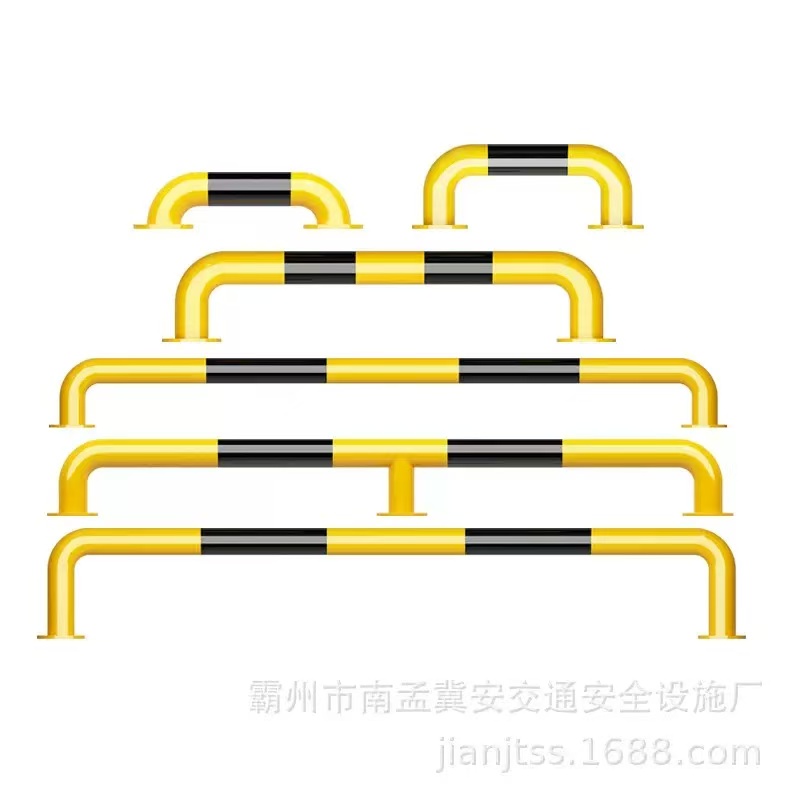
In high-traffic areas such as shopping districts, school gates, train station hubs, and scenic area entrances, barriers are core facilities for regulating traffic order and ensuring pedestrian safety. The height of the barriers directly affects the control effect: too high, and it can create a sense of oppression and may hinder emergency evacuation; too low, and it will be difficult to provide effective isolation and protection, increasing the risk of climbing over, crowding, and stampedes. Therefore, in high-traffic areas, the height of barriers needs to be scientifically selected based on the scene’s function, control requirements, and safety regulations. The following is a detailed analysis of the core influencing factors, suitable heights for different scenarios, and key selection points.Can glass railings be installed on high-rise balconies?
The selection of barrier height depends on three key factors. First, the control objective: If the only need is to guide pedestrian flow and delineate passageways (such as internal passageways in shopping malls or scenic area walkways), low-height barriers are sufficient; if it is necessary to prevent climbing over and isolate dangerous areas (such as train station platforms or areas around construction sites), then medium- to high-height barriers should be selected. Second, scene safety risks: In densely populated areas near dangerous areas such as motor vehicle lanes, steps, and deep pits, the barriers must have sufficient height and protective strength to prevent people from accidentally falling or entering dangerous areas. The risk is lower in purely pedestrian areas, where the height can be appropriately reduced to improve pedestrian comfort. Third, emergency evacuation requirements: Rapid evacuation routes must be reserved in densely populated areas. The height of the barriers must be adapted to emergency scenarios to avoid hindering evacuation efficiency due to excessive height. Emergency exits that can be opened quickly should also be set up in key locations.How to Repair a Bent Guardrail
Recommendations for barrier height adaptation in different densely populated scenarios:
- Guiding scenarios such as commercial complexes and scenic walkways: It is recommended to choose barriers with a height of 0.8-1.0 meters. The core requirement for these scenarios is to delineate passage areas and guide the orderly flow of people, without the need for strict obstruction. A height of 0.8-1.0 meters can clearly define area boundaries without creating a sense of oppression, while also facilitating quick movement and guidance by staff. 1. Simple barriers made of stainless steel or PVC, with a movable design, can be easily adjusted according to changes in pedestrian flow, such as temporary crowd control in shopping districts during holidays or guiding sightseeing routes during peak tourist seasons.
- Protective scenarios such as school gates, kindergartens, and pedestrian crossings: A barrier height of 1.2-1.5 meters is recommended. These scenarios involve minors or frequent pedestrian crossings, requiring special attention to prevent vehicles from entering and people from climbing over. A height of 1.2-1.5 meters effectively prevents children from climbing while providing a clear warning to adults. Reflective markings enhance nighttime visibility, ensuring safety during peak school hours and travel times. During installation, ensure precise alignment with crosswalks and traffic lights, and reserve dedicated pedestrian walkways to avoid obstructing normal traffic.Which Material is Most Durable for Crash Barriers?
- Controlled scenarios such as train stations, airport terminals, and large event venues: A barrier height of 1.5-1.8 meters is recommended. These scenarios involve extremely high pedestrian traffic and a complex demographic, necessitating strict demarcation of functional areas such as ticketing areas, security checkpoints, and waiting areas to prevent crowd chaos and unauthorized entry. A height of 1.5-1.8 meters provides strong obstruction, effectively reducing attempts to climb over. Combined with retractable fences and intelligent security gates, a comprehensive control system can be established. Clearly marked access signs should be displayed on the barriers, and quick-release switches should be installed at emergency exits to ensure rapid evacuation in emergencies.
- High-risk protection scenarios such as around construction areas and hazardous area boundaries: It is recommended to choose barriers with a height of 1.8 meters or higher, and protective netting can be used if necessary. These scenarios must completely prevent people from approaching to avoid accidents. A height of 1.8 meters or higher effectively prevents adults from climbing over, and dense protective netting can prevent people from squeezing through gaps. Clear warning signs (such as “Do Not Approach” and “Construction Danger”) should be placed around the barriers, and warning lights should be installed at night to enhance safety reminders.
When selecting barriers, the following should also be noted: In areas with high pedestrian traffic, corrosion-resistant and impact-resistant materials such as hot-dip galvanized steel and stainless steel should be chosen to avoid damage after long-term use; the spacing between barriers should be controlled within 12 centimeters to prevent children or objects from getting stuck; at the same time, they must comply with local traffic facility regulations to avoid illegal installations that affect the overall traffic environment. In short, the height of barriers in high-traffic areas needs to be “adapted to needs” to balance control effectiveness, pedestrian comfort, and emergency safety in order to truly play a role in regulating order and ensuring safety.