
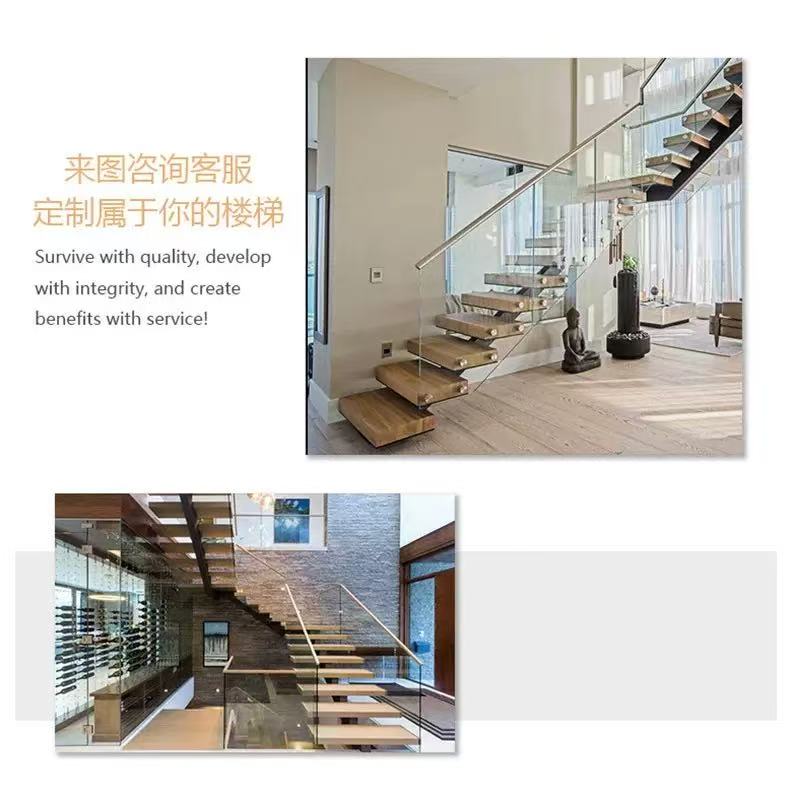
Glass railings are widely used in balconies, staircases, corridors, and terraces due to their transparency, aesthetics, and unobstructed views. However, the core safety of glass railings depends on the thickness and type of glass. Choosing the right thickness ensures both aesthetics and protection. Different scenarios have significantly different stress requirements and usage environments, requiring different safety glass thicknesses. Blindly choosing excessively thin or thick glass can either pose safety hazards or result in wasted costs; precise matching to the scenario is key.Can Glass Railings Display Holographic Images?
First, the core premise is clear: glass railings must use safety glass (tempered glass or laminated tempered glass). Ordinary float glass is strictly prohibited; this is fundamental to safety. Under this premise, the thickness selection must be combined with the stress intensity of the scenario. For low-risk scenarios such as home balconies and indoor corridors (where daily use only involves leaning against the glass without severe impact), 8mm thickness for a single tempered glass pane is recommended. If the railing span is large (single glass pane width exceeds 1.2m), a 10mm thickness is necessary to prevent glass deformation or breakage due to the large span. Glass railings in these scenarios must meet impact resistance requirements—a 10kg object dropped from a height of 1m onto the glass must not cause penetrating damage.What to do if tempered glass railings spontaneously shatter?
For purchases, please add the following WhatsApp contact.
High-risk scenarios require further increases in thickness and protection levels. Stair railings and terrace railings, which may withstand greater impact forces (such as children climbing or heavy object collisions), are recommended to use 10mm tempered glass. For high-rise terraces and public areas (shopping malls, office building corridors) with high foot traffic and fall risk, laminated tempered glass is preferred. Common specifications are 8+8mm (two layers of 8mm tempered glass laminated) or 10+10mm. Even if the outer glass layer breaks, the inner laminate can still firmly hold the fragments in place, preventing people from falling, offering far greater safety than single-piece tempered glass. Furthermore, outdoor glass railings, in addition to meeting thickness requirements, must also be made of tempered glass with an anti-explosion coating to reduce the risk of spontaneous breakage due to temperature changes.A Complete Guide to Balcony Glass Railing Installation
Besides thickness, these details also directly affect safety. The frame and fixing method of glass railings must match the glass thickness. For 8-10mm glass, it is recommended to use an aluminum alloy frame, with the fixing points spaced no more than 60cm apart to ensure even stress distribution. For laminated glass, choose a high-performance PVB or SGP laminate layer with a thickness of no less than 1.52mm to improve bonding strength. Simultaneously, it must comply with national standards: when the lowest point of the balcony railing glass is less than 50cm from the ground, laminated tempered glass must be used; the railing height must be adjusted according to the floor level, no less than 1.05m for lower floors and no less than 1.1m for higher floors to prevent children from climbing over. When purchasing, check the 3C certification mark on the glass to ensure it is a legitimate safety glass product.
In summary, the safety thickness of glass railings should be selected “according to scenario classification”: for low-risk family balconies and indoor corridors, choose 8-10mm single-piece tempered glass; for high-risk staircases, terraces, and public areas, choose 10mm tempered glass or 8+8mm or 10+10mm laminated tempered glass. The core principle is to match the stress requirements and risk levels of the scenario while meeting national safety standards, and to pay attention to details such as glass type and fixing method. Avoiding blindly pursuing excessively thick glass while also selecting thin glass to address scenario risks is crucial for establishing a solid safety baseline, ensuring that glass railings are both aesthetically pleasing and safe.