
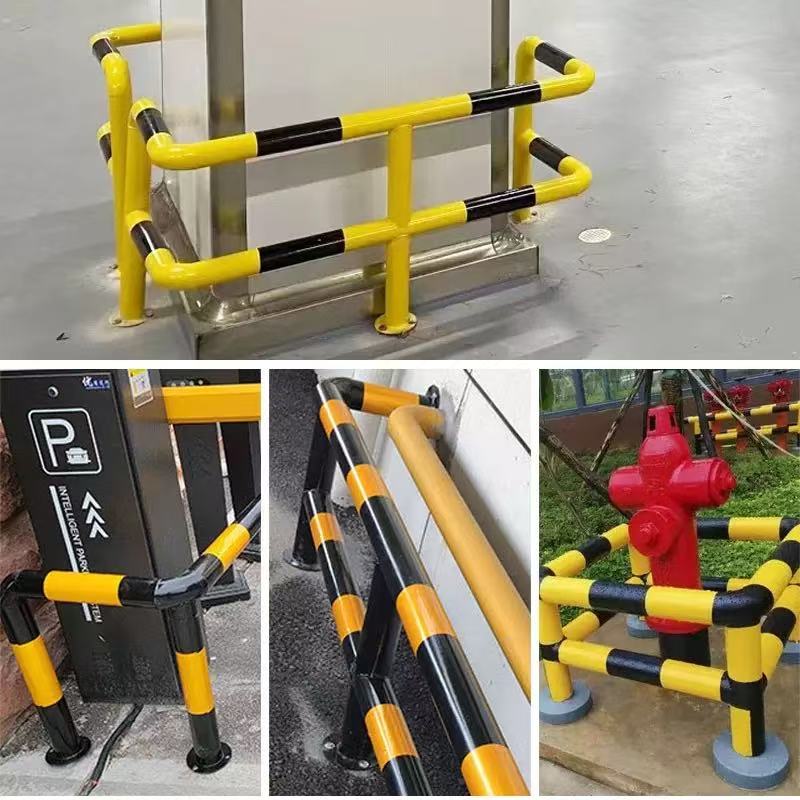
When a guardrail is struck by a vehicle and becomes bent and deformed, its protective performance is directly reduced. If not repaired promptly, it may pose a safety hazard to subsequent traffic. Repairing a bent guardrail requires targeted measures based on the degree of bending (minor deformation, severe deformation) and the guardrail material (steel, concrete, etc.). The goal is to ensure structural stability after repair while restoring its original protective function as much as possible. Below is a detailed breakdown of the complete process, specific methods, and key precautions for repairing a bent guardrail.Which Material is Most Durable for Crash Barriers?
Preparatory work before repair is fundamental to ensuring the repair effect and operational safety. The core steps include safety precautions, tool and material preparation, and damage assessment. First, safety precautions: Place warning signs (such as warning cones, warning lights, and construction warning signs) 50-100 meters before and after the repair area to guide vehicles and pedestrians to detour. If the repair is on a busy road or bridge, contact traffic management authorities to close some lanes and arrange for personnel to manage traffic on-site to prevent secondary accidents during construction. Secondly, prepare the tools and materials: Prepare tools according to the material and degree of deformation of the guardrail. For steel guardrails, prepare hydraulic jacks, wrenches, welding machines, angle grinders, rust remover, and anti-corrosion paint; for concrete guardrails, prepare epoxy repair adhesive, carbon fiber cloth, templates, and vibrators. Also prepare matching reinforcement accessories, such as bolts, washers, and steel plates. Finally, assess the damage: carefully inspect the bent parts and degree of deformation of the guardrail to determine if there is any hidden damage (such as steel cracking, internal steel reinforcement corrosion, loose post foundations, etc.). If the damage is too severe (such as steel breakage or large-scale concrete collapse), the parts must be replaced directly rather than repaired.How to Reinforce and Stabilize Shaking Crash Barriers
For minor bending deformation (only surface dents, bending angle less than 30°, no cracks, and no material damage), a “correction and repositioning + reinforcement” method can be used for repair. This method is suitable for guardrails with good toughness, such as hot-dip galvanized steel and stainless steel. The first step is to fix the guardrail in place: use brackets or ropes to securely fix the guardrail on both sides of the bend to prevent overall swaying during correction. If the posts are also bent, the bottom of the posts needs to be reinforced first to prevent them from tipping over during correction. The second step is to correct slowly: align the hydraulic jack with the highest point of the bend and slowly apply pressure to gradually push the guardrail back to its original position. During this process, the flatness and verticality of the guardrail need to be repeatedly measured to avoid excessive force that could cause secondary deformation or cracking. If there is a slight dent in the bend, a pry bar can be used to assist in repositioning. The third step is to reinforce: after repositioning, weld a steel plate (the steel plate size must cover the bend area, and the thickness must match the original guardrail) to the inside or outside of the bend to enhance the structural strength of that area. For bolted connections, check if the bolts are loose, tighten them, install anti-loosening washers, and replace the bolts if necessary. The fourth step is corrosion prevention: Use an angle grinder to grind the surfaces of the welded and bent areas to remove rust and oxide layers. Apply rust remover, and after drying, apply an anti-rust primer and an anti-corrosion topcoat to ensure consistent corrosion prevention with the original railing.Can Glass Railings Display Holographic Images?
If the railing is severely bent (bending angle greater than 30°, cracks in the steel, or breakage in the concrete railing), simple correction cannot guarantee safety. A “partial cutting and replacement + overall reinforcement” method is required. For steel railings: First, cut the damaged area using an angle grinder along the intact areas on both sides of the bend/crack, removing severely deformed sections. Second, precisely align the new railing sections, ensuring they perfectly match the specifications and dimensions of the original railing, with the gap at the joint controlled within 2 mm. Third, weld and fix the new section firmly to the original railing using full welding. After welding, grind the weld seam with an angle grinder to remove weld slag. Fourth, perform corrosion prevention treatment and overall inspection. For concrete guardrails: If only localized bending and cracking occurs, first remove the loose concrete from the cracked area, clean the internal reinforcing steel, treat the rusted parts of the reinforcing steel with rust remover, then tie new reinforcing mesh, erect formwork, pour high-strength repair concrete or inject epoxy mortar, vibrate to compact, and cure for 7-14 days. If bending is accompanied by large-scale collapse, the damaged section must be demolished, and a new concrete guardrail must be poured, ensuring a firm connection to the original foundation.
Three key precautions must be kept in mind during the repair process: First, alignment and welding operations must be performed by professionals, especially welding of steel railings. The weld strength must be no less than the original railing material strength to avoid safety hazards due to improper operation. Second, the repair materials used must match the original railing material. For example, hot-dip galvanized steel railings require repair steel plates of the same material, and concrete requires repair materials of the same or higher grade to ensure structural compatibility. Third, a stability test must be conducted after repair. Gently tap the repaired area and surrounding area with a hammer to observe for any shaking or abnormal noise. Simultaneously check the flatness and verticality of the railing to ensure it meets standards and the repair effect is satisfactory.
Post-repair maintenance is equally essential. The repaired railing should be inspected again within 1-2 weeks to check for peeling of the anti-corrosion coating and loose connections. In daily use, it is recommended to inspect the repaired area every 3-6 months, especially after severe weather such as heavy rain or typhoons, to promptly identify and address any potential hazards. Through scientific repair methods and standardized post-repair maintenance, the bent guardrails can regain their safety protection function and ensure road traffic safety.