
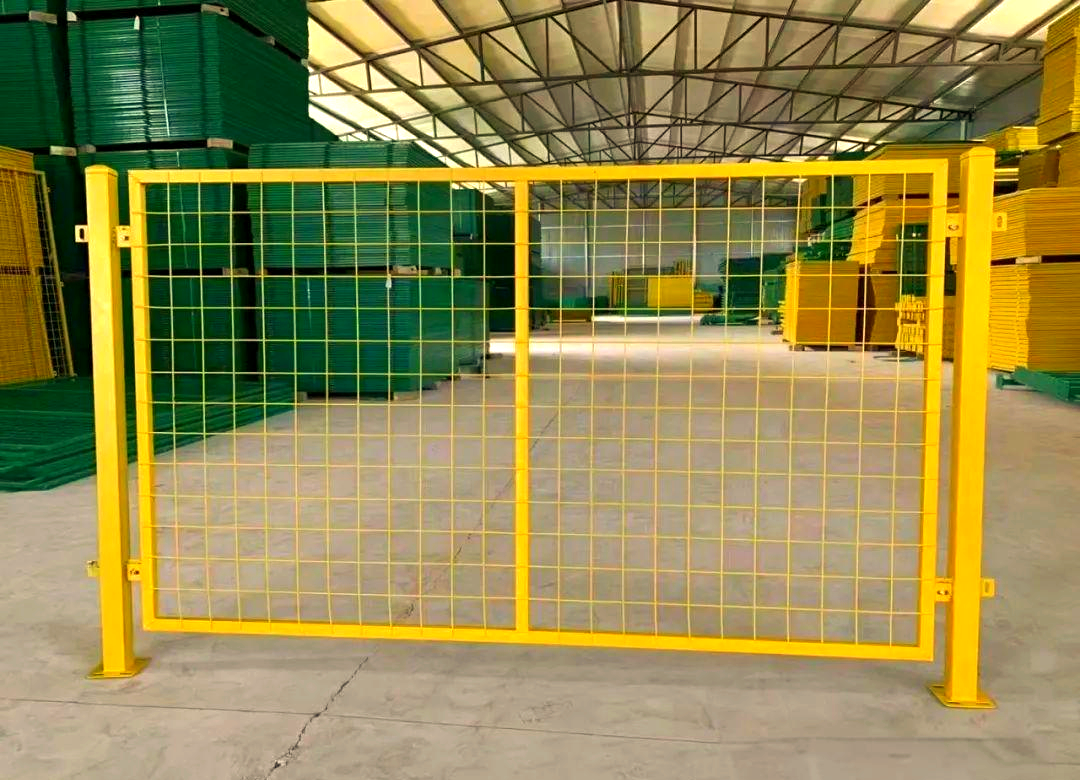
The stability of a guardrail hinges on the depth at which its posts are buried. Insufficient depth can cause posts to tilt, sway, or even collapse, rendering them ineffective for protection. Excessive depth, on the other hand, increases construction costs and time, resulting in wasted resources. Determining a suitable burial depth requires a comprehensive assessment of geological conditions, guardrail type, usage scenario, and local climate. There is no single “standard depth.” This article provides a detailed analysis of the core factors influencing burial depth selection, appropriate burial depth standards for different scenarios, and key points for construction reinforcement, helping you accurately control the burial depth and ensure the long-term stability of your guardrail.How to Prevent Guardrail Foundation Subsidence
The core logic for selecting guardrail post burial depth is “matching overturning resistance with load-bearing capacity,” requiring consideration of four key factors. First, geological conditions: soft soil, quicksand, and other weak geological formations have poor bearing capacity, necessitating increased burial depth to enhance stability; hard soil and rock formations have strong bearing capacity, allowing for a more appropriate reduction in burial depth. Secondly, the type and height of the guardrail: Low guardrails (height ≤ 1.2 meters) have lower requirements for burial depth; high guardrails (height > 1.5 meters) or crash barriers require deeper burial to resist lateral thrust. Thirdly, the stress conditions of the usage scenario: In areas with high pedestrian and vehicle traffic (such as roads and commercial areas), the posts may be subjected to collisions and compression, requiring increased burial depth; in low-stress scenarios such as courtyards and scenic areas, the burial depth can be reduced accordingly. Fourthly, the climate environment: Areas prone to typhoons and heavy rains require deeper burial to enhance wind and flood resistance; in frost heave areas, the burial depth should be set below the frost line to avoid the posts bulging and being damaged due to soil frost heave in winter.What Height of Barriers Should Be Used in High-Traffic Areas?
Standards for matching guardrail post burial depth to different scenarios, precisely matching stability requirements:
- Low-stress scenarios such as courtyards and residential areas: In these scenarios, guardrails are mostly made of PVC or lightweight wrought iron, with a height of 0.8-1.2 meters, mainly used for area demarcation, with no risk of vehicle collision. 1. For ordinary hard soil: The recommended embedment depth for the posts is 30-50 cm. In soft soil or backfill areas, the depth should be increased to 50-60 cm. Plain soil can be used for backfilling and compaction during construction, eliminating the need for additional concrete pouring. This ensures stability while controlling construction costs, making it suitable for family courtyards, community walkways, and other similar locations.How to Prevent Guardrail Foundation Subsidence
- For parks, scenic areas, and other medium-stress environments: The height of the guardrails is typically 1.2-1.5 meters, primarily made of stainless steel or ordinary wrought iron. They need to withstand external forces such as pedestrians leaning on them and minor collisions. In ordinary hard soil, the recommended embedment depth is 50-70 cm. In soft soil or quicksand, the depth should be increased to 70-80 cm. Backfilling should be done in layers, with each layer not exceeding 20 cm in thickness. If the scenic area has a slope, the posts on the uphill side should be 10-15 cm deeper than in flat areas to prevent tilting due to uneven stress caused by the terrain.
- Urban secondary roads, non-motorized vehicle lanes, and other road scenarios: Guardrails should be 1.2-1.5 meters high, primarily made of impact-resistant wrought iron or aluminum alloy, and must withstand collisions with non-motorized vehicles and daily wind forces. For ordinary hard soil, a burial depth of 60-80 cm is recommended; for backfill soil or soft soil, the depth should be increased to 80-100 cm, and a 10-20 cm thick C15 concrete pad should be poured at the bottom of the post pit to enhance load-bearing capacity. If the road is near rivers, ponds, or other damp areas, the burial depth should be increased by another 10 cm, and the bottom of the posts should be rust-proofed to prevent corrosion damage caused by damp soil.
- High-risk load-bearing scenarios such as urban main roads and industrial parks: Guardrails should be 1.5-2.0 meters high, mostly made of heavy-duty impact-resistant materials, and must withstand minor collisions with motor vehicles and significant external forces such as strong winds. For ordinary hard soil, the recommended burial depth is 80-120 cm; for soft soil and backfill soil, the depth needs to be increased to 120-150 cm, and a “concrete pouring and fixing” method must be used. C25 or higher grade concrete should be poured into the pit to firmly bond the column to the concrete, forming a stable foundation structure. In typhoon-prone areas, the depth should be increased by 20-30 cm, and diagonal bracing should be added to the bottom of the column for reinforcement to improve wind resistance.
- General standard for frost heave areas: Regardless of the scenario, the burial depth of the guardrail posts in frost heave areas must exceed the local frost layer thickness by 20-30 cm. For example, in some parts of northern my country, the frost layer thickness reaches 1.2 meters, and the post burial depth needs to be at least 1.4 meters to prevent the posts from being lifted by frost heave in winter, causing deformation and loosening of the guardrail. During construction, a gravel cushion layer can be laid at the bottom of the post pit to reduce the impact of frost heave on the posts.
Key points of construction and reinforcement further ensure the stability of the posts. First, the dimensions of the post pit must be standardized. The width of the pit opening should be 30-50 cm larger than the diameter of the post, and the width of the pit bottom should be 10-20 cm narrower than the opening, forming a shape that is wider at the top and narrower at the bottom, improving the grip of the backfill soil. Second, backfill must be properly compacted. Loose soil and frozen soil are prohibited for backfilling. Layered compaction is required to ensure that the backfill soil density reaches over 95%, preventing post tilting due to later soil settlement. Third, special reinforcement measures are necessary. For high-rise guardrails or high-risk scenarios, flanges can be welded to the bottom of the posts and fixed to the ground with expansion bolts, combined with concrete pouring, providing double protection for stability. In soft soil areas, gravel and steel mesh can be placed in the post pit to enhance the foundation’s bearing capacity.
In summary, the core of determining the burial depth of guardrail posts is “matching the scenario and geology,” which needs to be accurately determined based on factors such as stress conditions and climate. Adhering to the adaptation standards for different scenarios, while simultaneously ensuring proper construction reinforcement, is essential to ensure the long-term stability of the guardrail and its full effectiveness in isolation and protection. If the burial depth for a specific scenario is uncertain, it is recommended to conduct a simple geological survey of the site first, or consult a professional construction team to avoid rework due to improper burial depth.