
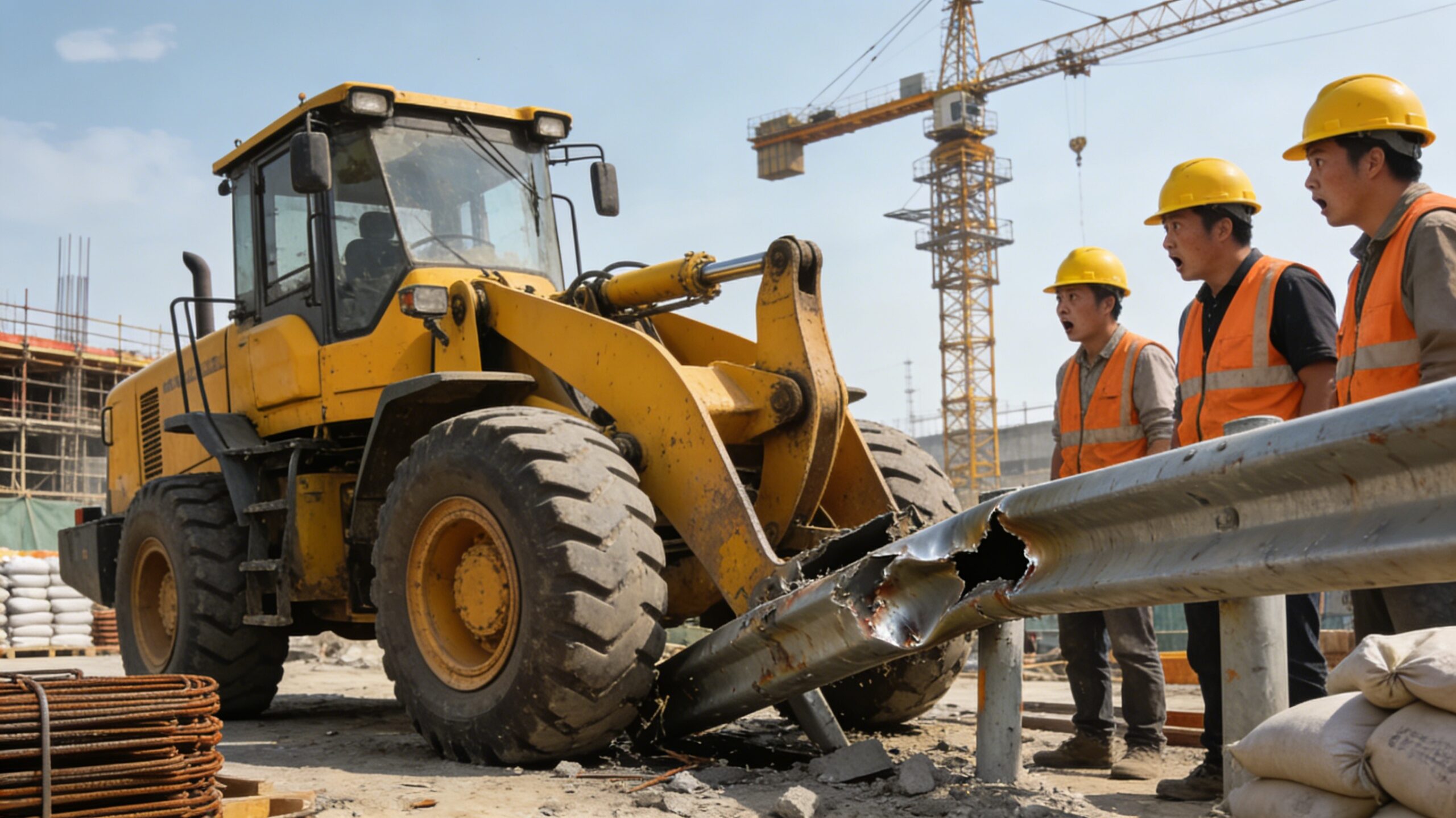
This is a common occurrence on construction sites: a construction vehicle crashes into the fence, breaking it into pieces and causing significant repair costs. Who should pay for it? Don’t be confused; the answer is simple—it depends on the specific circumstances. Whoever is at fault is responsible!Will glass railings frost over in winter?
First, let’s consider the most common scenario: the construction vehicle belongs to the construction site, and the driver is also from the site. If the driver was careless, such as reversing without looking or going too fast and failing to brake in time, directly damaging the fence, then without a doubt, the construction site is responsible for the repairs. After all, it’s their vehicle and their driver; they have to take responsibility for their mistakes. They can’t let the fence “bear the blame,” right?Where to find the 3C mark on glass railings?
What if the construction vehicle doesn’t belong to the construction site but is rented from an external company or a subcontracted team? In that case, the rental company or subcontracted team is most likely responsible. For example, if a cement mixer truck, hired from outside the construction site, crashes into a guardrail while reversing, the cement mixer company should pay for the repairs. Of course, if the driver deliberately drove recklessly or committed serious violations, the driver should also bear some responsibility; the company shouldn’t be solely blamed.What to do if your glass railing is wobbly?
Another situation not to be overlooked: the guardrail itself might be faulty. For instance, if the construction company didn’t install the guardrail securely and just stuck it in the ground, it might wobble in the wind and break easily with a slight bump from a construction vehicle. In this case, the primary responsibility doesn’t lie with the driver or owner, but with the construction company. Why didn’t they install the guardrail properly? This is a case of “digging their own grave,” and they have to pay for the repairs themselves.
Some might ask: what if both the driver and the construction company are at fault? For example, if the driver was driving too fast and the construction company didn’t put up warning signs next to the guardrail, causing the driver to crash into it. In this case, the primary responsibility needs to be determined. Generally, the driver’s excessive speed is the primary problem, and they bear the majority of the responsibility. The construction company, by failing to place warning signs, is also at fault and bears a smaller share of the responsibility; both parties should pool their money to repair the guardrail.
There’s also a special case: interference from a third party. For example, someone might secretly remove the guardrail’s fixing screws or pile things up next to it, causing a construction vehicle to trip over them and damage the guardrail. In this case, the person who removed the screws or piled things up is responsible. If this person cannot be found, the construction site may have to pay for the repairs upfront and then reimburse them once the person is found.
In essence, regardless of the situation, the core principle is: whoever is at fault is responsible. Drivers should drive carefully, pay attention to the road, and drive slowly to avoid damaging the guardrails; construction companies should ensure the guardrails are securely installed and warning signs are properly placed to prevent accidents. This way, everyone can avoid trouble and arguments over guardrail repairs—how convenient!
Some might worry: what if no one takes responsibility? Simple, find evidence! Take photos of the scene, review surveillance footage, and determine whose fault it was. Use the evidence to find the responsible party. If you really can’t reach an agreement, seek help from relevant departments to coordinate; you’ll eventually be able to clarify the matter.