
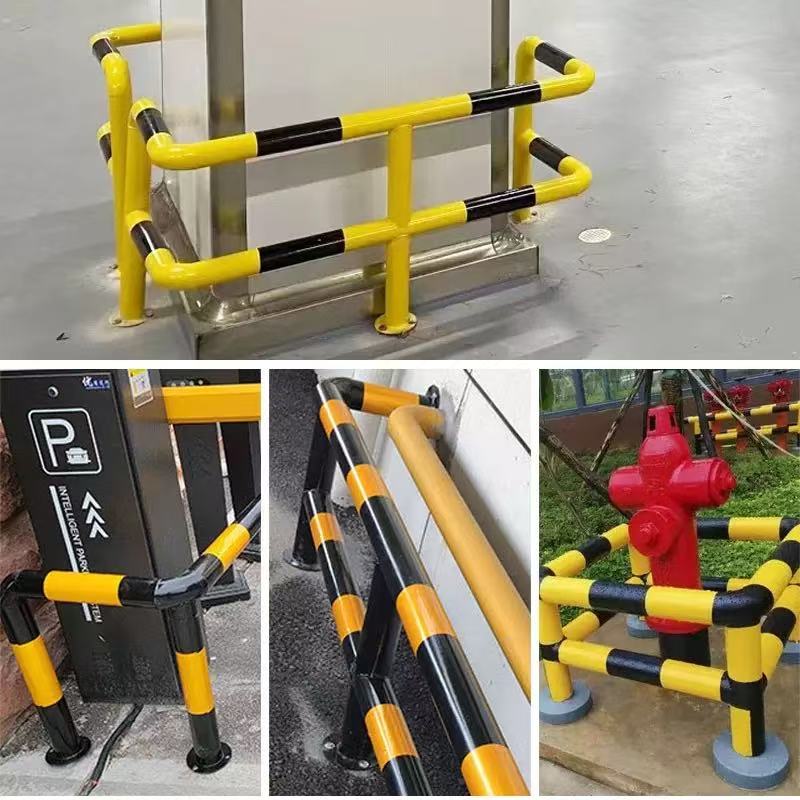
Guardrail foundation subsidence is a common safety hazard in outdoor guardrail use. Once it occurs, it can cause the guardrail to tilt, loosen, or even collapse, losing its protective and isolating function. This is especially problematic in areas such as roads, scenic spots, and construction sites, potentially leading to traffic accidents or injuries. Guardrail foundation subsidence is often related to geological conditions, construction techniques, drainage design, and improper post-construction maintenance. To fundamentally avoid this problem, a comprehensive approach is needed, encompassing “preliminary investigation, standardized construction, and scientific maintenance.” Below is a detailed breakdown of the core measures to prevent guardrail foundation subsidence, providing comprehensive protection for the safety and stability of guardrails.How to Easily Clean Glass Railings
Preliminary geological investigation and scheme design are the fundamental prerequisites for preventing foundation subsidence. Different geological conditions place significantly different demands on the bearing capacity of the foundation. A detailed survey of the installation area is essential before construction. For soft soil, quicksand, or other weak geological conditions, a foundation reinforcement plan must be developed in advance to prevent subsidence during direct construction. For backfilled areas, the compaction degree of the backfill soil must be confirmed; areas that do not meet standards must be re-compacted or replaced with high-quality soil. If the groundwater level is high, drainage and flood prevention must be carefully considered to prevent groundwater from soaking the foundation and softening the soil. Simultaneously, the foundation dimensions and depth must be designed to match the type of guardrail (e.g., crash barriers, safety barriers) and the load requirements of the usage scenario. Generally, the foundation depth for ordinary guardrails should be no less than 60 cm, while heavy-duty crash barriers require a depth of 1-1.5 meters to ensure the foundation’s bearing capacity meets the long-term needs of the guardrail.A Complete Guide to Balcony Glass Railing Installation
Standardized construction techniques are crucial for ensuring a stable foundation, and three key steps must be carefully controlled. The first step is the excavation and treatment of the foundation pit. The pit must be excavated strictly according to the design dimensions to avoid over-excavation or under-excavation. If soft soil layers are encountered after excavation, a layer of crushed stone, gravel, or other similar materials must be laid and compacted in a timely manner to enhance the bearing capacity of the foundation. If there is water accumulation at the bottom of the pit, it must be drained and dried before proceeding with subsequent construction. The second step is the foundation pouring and fixing of embedded parts. C30 or higher grade concrete should be used for pouring. During pouring, it must be vibrated and compacted to avoid defects such as honeycombing and voids. Embedded parts (such as anchor bolts and flanges) must be accurately positioned and firmly fixed to ensure a tight connection with the guardrail posts. After pouring, curing for at least 7 days is required. The guardrail should only be installed after the concrete strength reaches the required level to prevent early stress leading to foundation deformation. The third step is backfilling and compaction. After the concrete has cured, backfill the soil in layers, with each layer not exceeding 30 cm in thickness. Use a compactor or rammer to fully compact the soil, achieving a compaction degree of over 95% to prevent loose backfill soil from causing later settlement. A well-designed drainage system effectively prevents erosion of the foundation by groundwater and rainwater. Prolonged waterlogging of outdoor railing foundations can soften the surrounding soil, reduce its load-bearing capacity, and ultimately lead to subsidence. Therefore, drainage facilities must be installed around the railing foundation: for road railings, drainage ditches along the sides of the road can be used to ensure timely drainage; for areas without existing drainage systems, such as scenic spots and courtyards, drainage ditches should be excavated outside the foundation, or permeable bricks or gravel layers should be laid to guide rainwater to quickly infiltrate or drain. Simultaneously, the top of the railing foundation should be 5-10 cm higher than the surrounding ground level to create a drainage slope and prevent rainwater from accumulating on the foundation surface; in areas with high groundwater levels, collection wells or wellpoint dewatering methods can be used to reduce the impact of groundwater levels on the foundation.Which is better, frameless or framed glass railings?
Regular maintenance and dynamic monitoring are crucial for timely detection and mitigation of subsidence risks. During daily use, the condition of the guardrails should be inspected regularly. If the guardrails are found to be tilted, loose, or cracked at the junction of the posts and the ground, it may be a sign of foundation subsidence and should be investigated and addressed immediately. Before and after the rainy season each year, it is crucial to check the drainage system around the foundation for unobstructed flow and promptly remove silt and debris from the drainage ditches. For guardrails in soft soil or backfilled soil areas, it is recommended to measure the verticality of the guardrails every six months to monitor foundation settlement. If slight settlement is found, it can be addressed by reinforcing the surrounding soil (e.g., grouting) and adding supports (e.g., diagonal braces, tie rods). If the settlement is severe, the guardrails must be removed and the foundation reconstructed to prevent further damage.
In addition, specific protective measures should be taken for special scenarios: In areas prone to natural disasters such as earthquakes and typhoons, foundation designs with higher earthquake and wind resistance levels should be selected, such as spread foundations or pile foundations. On both sides of roads with heavy vehicle traffic, crash barriers should be added in front of the guardrail foundation to prevent damage to the foundation from vehicle impacts. In summary, preventing the foundation of guardrails from sinking requires adhering to the principle of “prevention first, combined with control.” Strict control must be exercised throughout the entire process, from initial design to later maintenance, to ensure the long-term stability of the guardrails and fully realize their safety protection function.