
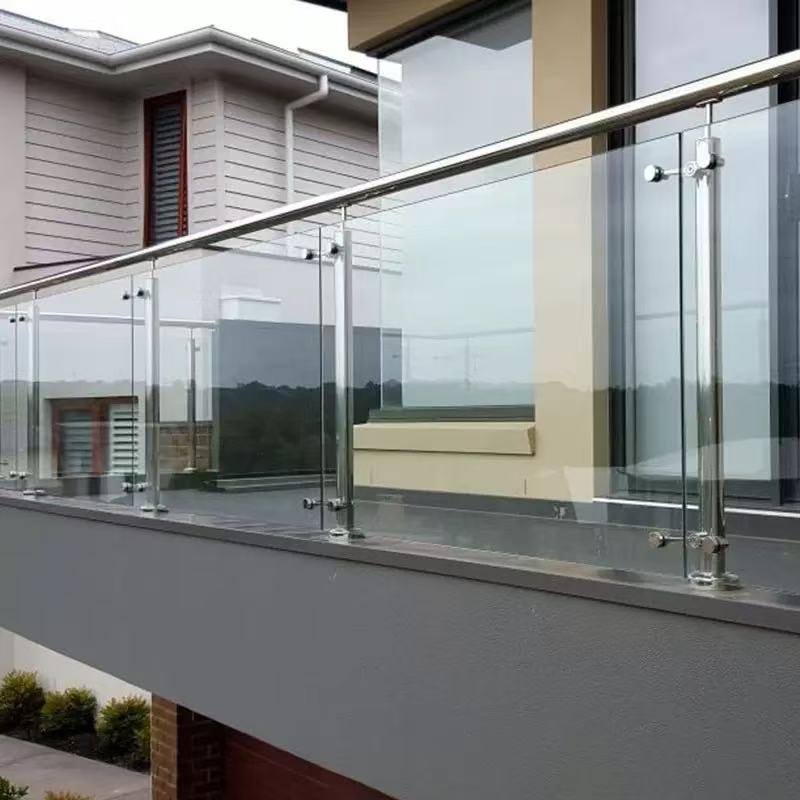
With the development of smart home technology, glass railings have long since transcended their traditional single attribute of security and protection, gradually upgrading towards aesthetics and intelligence. Holographic imaging, a common element of high-tech in science fiction, is now beginning to permeate the home décor field, leading many to wonder: can the glass of balcony railings also display holographic images? The answer is: technically feasible, but specific conditions must be met, and it is not yet in the widespread adoption stage. Below, we will analyze this issue in detail from the aspects of technical principles, implementation conditions, and practical limitations.A Complete Guide to Balcony Glass Railing Installation
To understand whether glass railings can display holographic images, we must first understand the core principle. The “holographic image” we often talk about is essentially a technology that records and reproduces the three-dimensional information of an object through the interference and diffraction of light. For glass railings to achieve this function, the key is to replace “ordinary protective glass” with “special glass with transparent display capabilities,” and then combine it with holographic projection equipment to create a synergistic effect. Currently, the mainstream compatible glass types are “transparent OLED glass” and “holographic film composite glass.” Transparent OLED glass can emit its own light to display images, with a light transmittance of up to 85%, and is indistinguishable from ordinary glass when not displaying anything. Holographic film composite glass, on the other hand, requires laser projection equipment to create a suspended holographic effect through film reflection, and is relatively cheaper.
However, achieving holographic images on glass railings is not simply a matter of “changing the glass.” Three core conditions must be met. First, the glass material must balance display quality and safety performance. Special glass used for railings must meet building safety standards, such as being tempered or laminated, and having impact resistance that meets protection requirements, avoiding a reduction in safety due to integrated display functions. Second, compatible hardware and software systems are required. In addition to special glass, a micro-projector, sensors (such as human body sensors and light sensors), and a control system must be installed. Software adjustments to image brightness and display modes ensure clear display even in strong daylight, while preventing image reflection from obstructing vision and causing safety hazards. Third, power supply and wiring issues must be resolved. Smart glass and projection equipment require a stable power supply. Wiring in the balcony space needs to be concealed within the frame or walls, ensuring both aesthetics and effective waterproofing and leak prevention to withstand the humid outdoor environment.
While technically feasible, applying holographic glass to balcony railings currently faces numerous practical limitations. Firstly, the cost is prohibitively high. A single 1㎡ piece of transparent OLED glass can cost tens of thousands of yuan. Adding the costs of projection equipment and installation, the overall cost is 5-10 times that of ordinary glass railings, far exceeding the budget of the average household. Secondly, the technology’s maturity is limited. The long-term weather resistance of existing transparent display glass remains to be verified. Sunlight and rain on balconies may accelerate screen aging, affecting display quality and lifespan. Furthermore, the practicality of the functionality is questionable. In a home setting, the core need for balcony railings remains safety and protection. Holographic projection is primarily used for decoration or information display, and its non-essential nature hinders its widespread adoption.
Looking at future development trends, with the iteration of transparent display technology and the reduction in costs, holographic glass railings are expected to gradually enter the high-end home furnishing market, such as in villas and smart model rooms, achieving multiple functions of “protection + decoration + intelligent interaction.” However, for ordinary families, it is currently recommended to prioritize conventional glass railings that meet safety standards. If there is a need for intelligent features, LED glass railings with simple light and shadow effects can be considered, balancing cost-effectiveness and aesthetics.
In summary, while holographic image display is indeed possible in glass railings, it is not yet widespread due to limitations in cost, technology, and practicality. With technological advancements, as the cost of special glass decreases significantly and its weather resistance improves substantially, this “cutting-edge technology” may become a new trend in home decoration, making balcony spaces both safe and practical, as well as technologically advanced.